Why FTP Still Matters
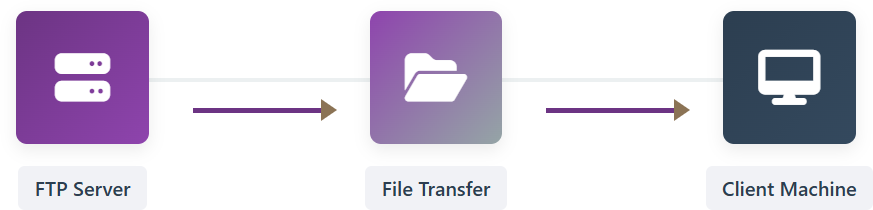
For decades, FTP (File Transfer Protocol) has been the backbone of file exchange between servers, web hosts, and enterprise systems. Despite its age, FTP remains a cornerstone for IT professionals who value direct access, predictable performance, and independence from third-party platforms.
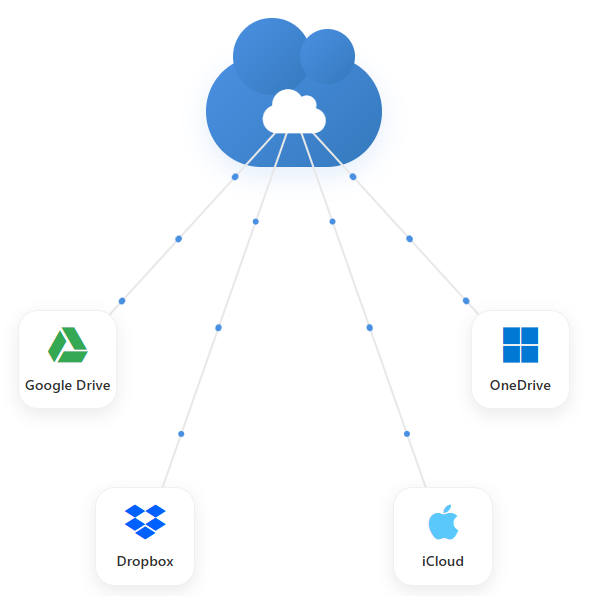
However, FTP’s simplicity also exposes its limits. It lacks the convenience, collaboration, and real-time syncing features that define the modern cloud storage experience. That’s why many organizations find themselves split between legacy FTP servers and newer solutions like Google Drive, Dropbox, or OneDrive.
The Rise of Cloud Storage
Over the past decade, cloud storage has redefined expectations for accessibility. Files are available anywhere, from any device, with automatic backups and versioning. Collaboration became frictionless - no manual uploads, no IP addresses, no port configuration.
But that ease of use came with trade-offs: vendor lock-in, privacy concerns, and monthly fees that can grow with storage size. For many IT teams and small businesses, moving everything to the cloud isn’t always ideal. They need the control of FTP with the flexibility of cloud workflows.
FTP vs Cloud Storage: A False Choice
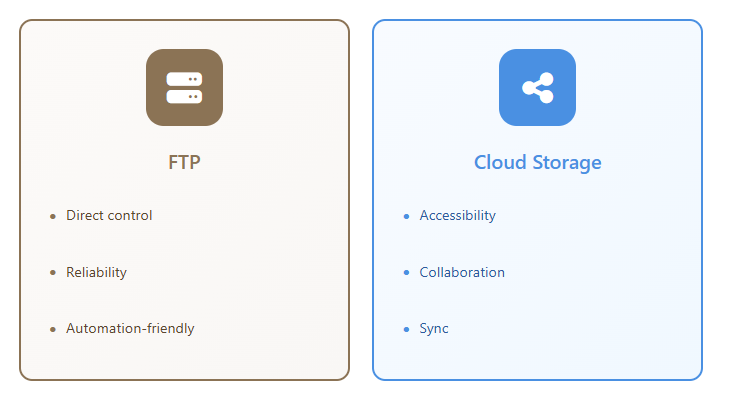
In most discussions, it’s framed as FTP vs Cloud Storage - as if the two must compete. In reality, both serve different needs. FTP provides a stable foundation for transferring large files and automating backups, while the cloud enables instant sharing and cross-platform collaboration.
The real opportunity lies not in replacing one with the other, but in merging them - creating a hybrid file management approach that offers the best of both worlds.
- FTP strengths: Direct control, high transfer reliability, automation-friendly.
- Cloud strengths: Accessibility, sync, collaboration, and sharing tools.
- Hybrid potential: Unified interface, easy drag-and-drop transfers, and no vendor lock-in.
Bridging the Gap: FTP to Cloud Workflows
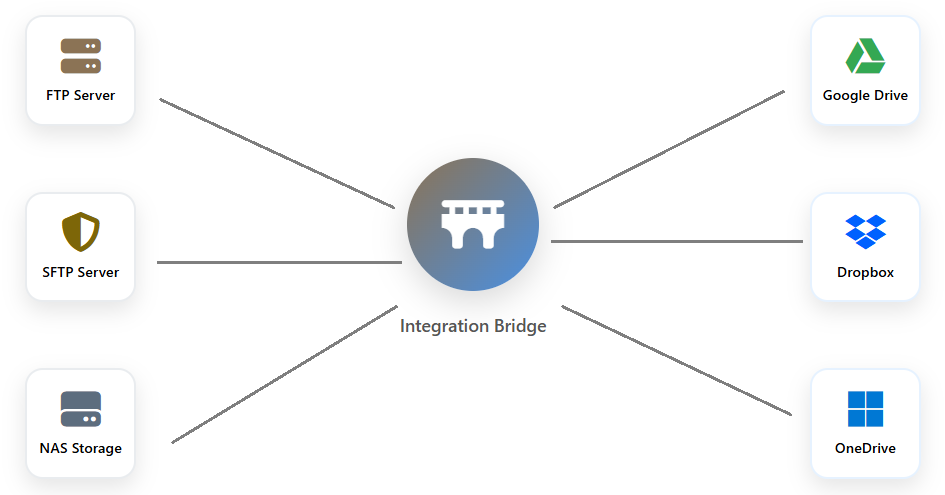
The transition from FTP to Cloud doesn’t have to be disruptive. In fact, many modern tools now allow users to connect both environments side by side. This approach, often referred to as FTP Cloud Integration, lets users manage files stored on servers, NAS devices, and cloud drives - all within a single interface.
Hybrid solutions like cloud-based FTP clients handle these integrations behind the scenes. Instead of uploading to a server first and then downloading to the cloud, files can flow directly from FTP to Google Drive, OneDrive, Dropbox, or other providers. That’s where the idea of a FTP Cloud Bridge comes in - acting as a universal connector for all your storages.
Automation and Efficiency
Another area where hybrid tools shine is automation. Traditional file transfer automation tools required scripts, command-line knowledge, or third-party schedulers. Today, modern clients can schedule uploads, sync directories, and trigger transfers between FTP and cloud automatically - without coding.
This opens doors for creative workflows:
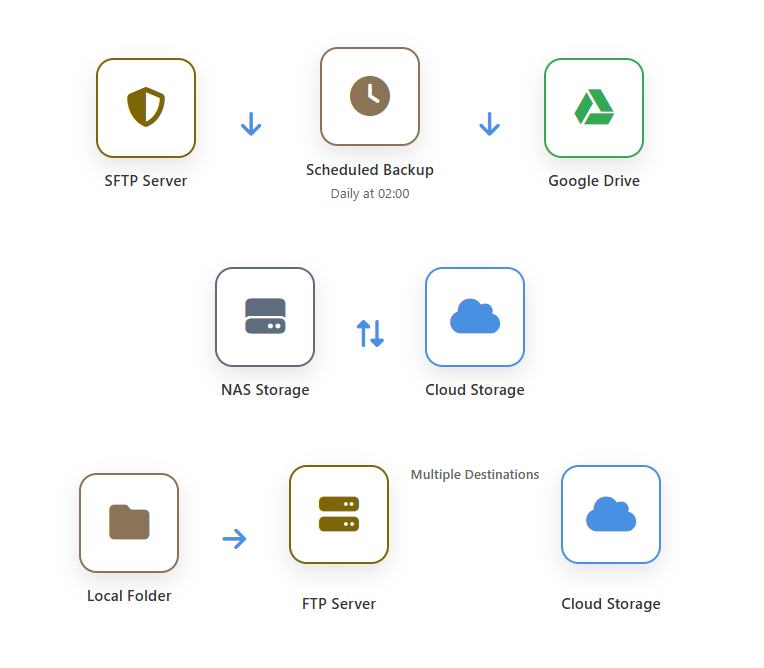
- Automatically back up a web server (via SFTP) to Google Drive every night.
- Sync NAS folders with cloud storage for off-site redundancy.
- Publish content from local drives directly to multiple servers or storage accounts.
Meet FTPie - The Hybrid File Manager
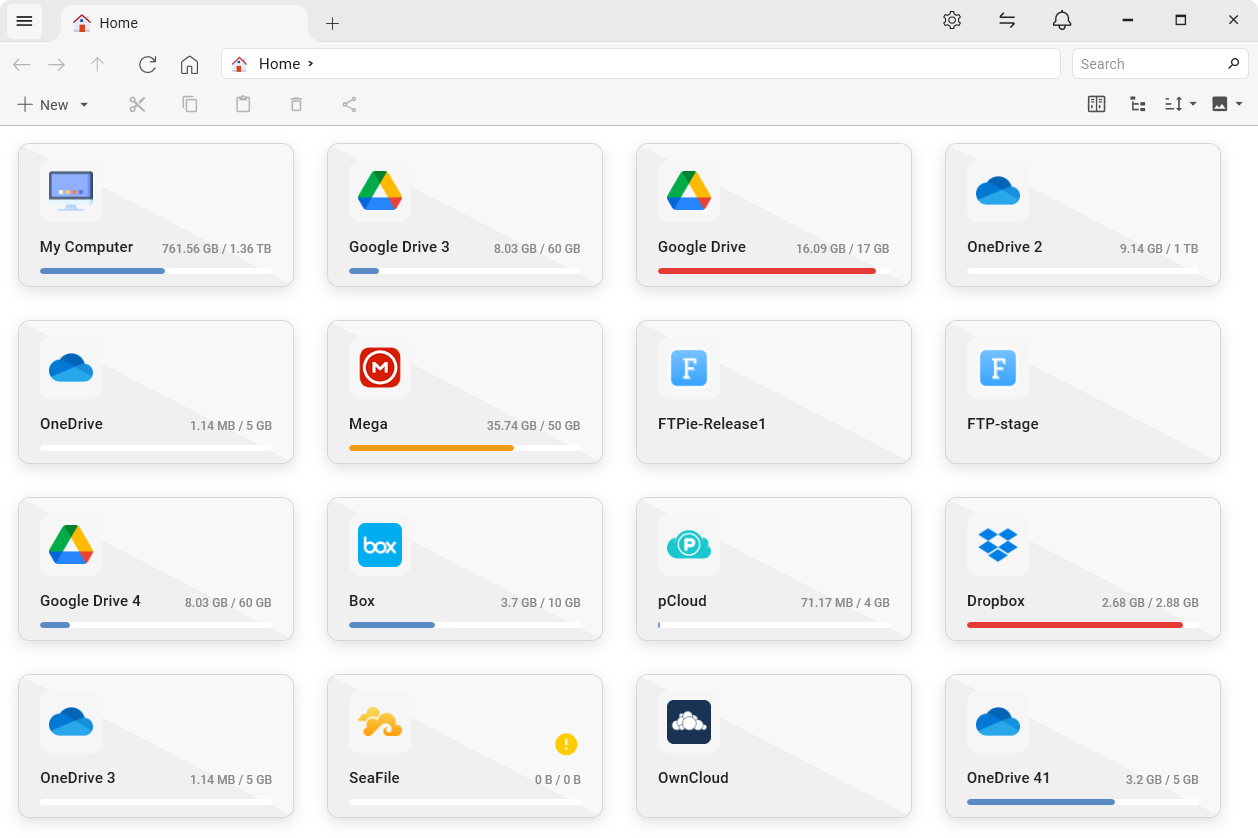
FTPie embodies this new era of hybrid file management. It’s a modern FTP client that supports FTP, FTPS, SFTP, WebDAV, NAS, and popular cloud storages under one interface. Users can open multiple tabs, preview media files, and drag-and-drop data across storages seamlessly.
Unlike traditional clients focused only on file transfer, FTPie treats all connected systems - whether an old FTP server or a modern cloud - as equal citizens. You can transfer, sync, encrypt, and share files without switching apps or worrying about protocol differences.
In short, it acts as a cloud-based FTP client that doesn’t abandon FTP but enhances it with the best parts of cloud computing.
The Future: Unified and Decentralized Storage
Looking forward, the line between local, cloud, and server storage will continue to blur. The next wave of tools will focus on interoperability - not replacement. Users will expect to move data between FTP servers, self-hosted NAS devices, and cloud services without caring where it physically lives.
This is where the concept of hybrid file management becomes essential. It respects the past, embraces the future, and keeps control in the user’s hands. Whether you’re a developer deploying files via SFTP or a designer syncing assets to the cloud, having one reliable bridge saves time, bandwidth, and complexity.
Conclusion
The debate between FTP vs Cloud Storage misses the bigger picture. The real progress lies in integrating both worlds - allowing traditional protocols and modern APIs to coexist. Tools like FTPie make that possible, transforming file management into something fluid, simple, and truly connected.
The new era isn’t about choosing between FTP and the cloud - it’s about mastering both.
To understand how FTP clients evolved to handle this, see why FTP clients stopped evolving - and how FTPie changed that. Or learn more about why FTP is still relevant in 2026.